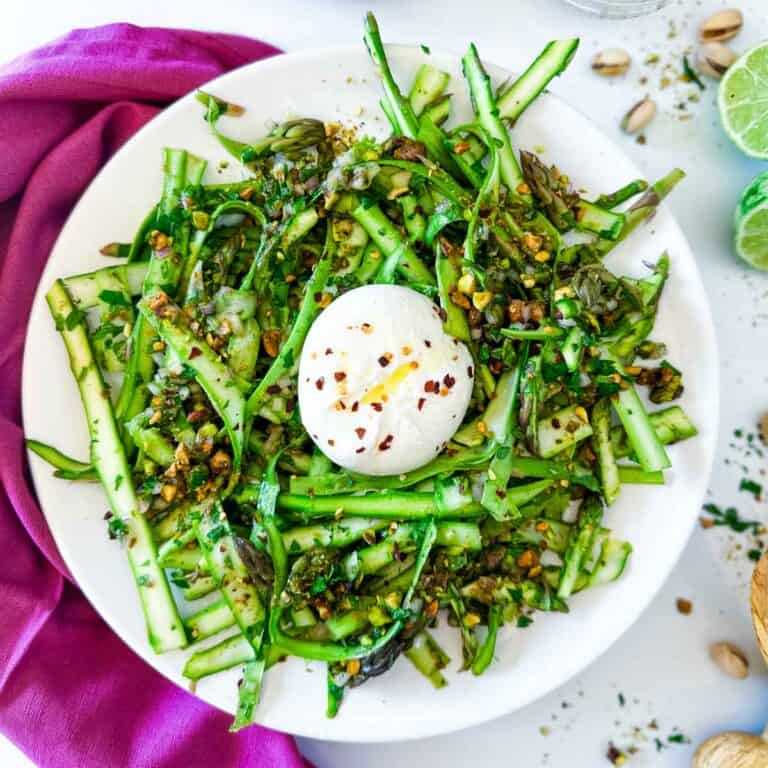
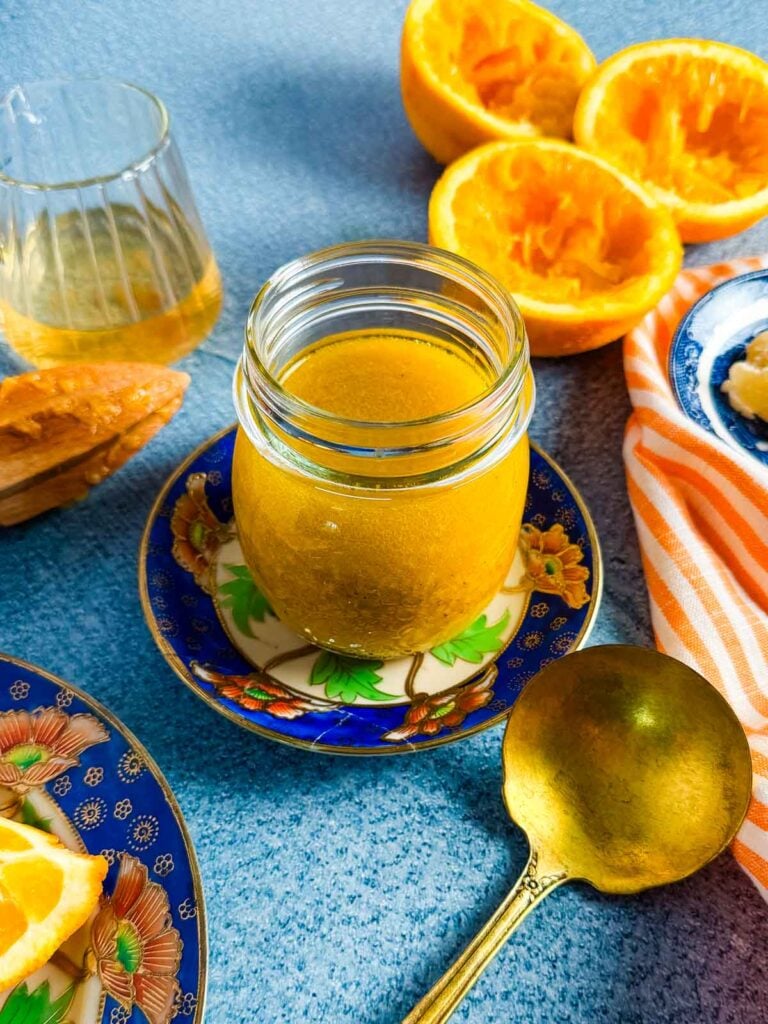
Ginger Vinaigrette (Fresh + Crystallized)
Ginger vinaigrette is five minutes, one bowl, and a whisk. That’s it. And yet it tastes like something you’d find at a really good restaurant, thanks to fresh ginger, orange, and crystallized ginger that add up to way more than the sum of their parts.
💌 Save This Recipe
I'll also send you other recipes I know you'll love. Unsubscribe at any time.
RECIPE SNAPSHOT
- PREP TIME: 5 minutes
- COOK TIME: None
- SERVINGS: Makes about 3/4 cup
- DIFFICULTY LEVEL: Super easy
- TECHNIQUE: Emulsification
- WHY YOU’LL LOVE IT: Two types of ginger, orange, and Dijon come together in five minutes to make a vinaigrette that goes on just about everything.
I love vinaigrettes because once you know the basic formula – acid, fat, an emulsifier (optional), and something to make it yours – you can make one out of almost anything. This one has become a favorite in our house when I want something bright and warming at the same time. That combo of orange and fresh ginger just does something really special – and the addition of crystalized ginger takes it to the next level!
It was actually born out of a salad I kept making on repeat – my apple fennel slaw with ginger vinaigrette. I needed a dressing that could stand up to those bold flavors, but also something a little different. After many iterations, this one nailed it. Now I put it on most anything that calls for ginger.
Let’s get into it!
Recipe Ingredients
You’ll need the following ingredients to make this ginger vinaigrette:
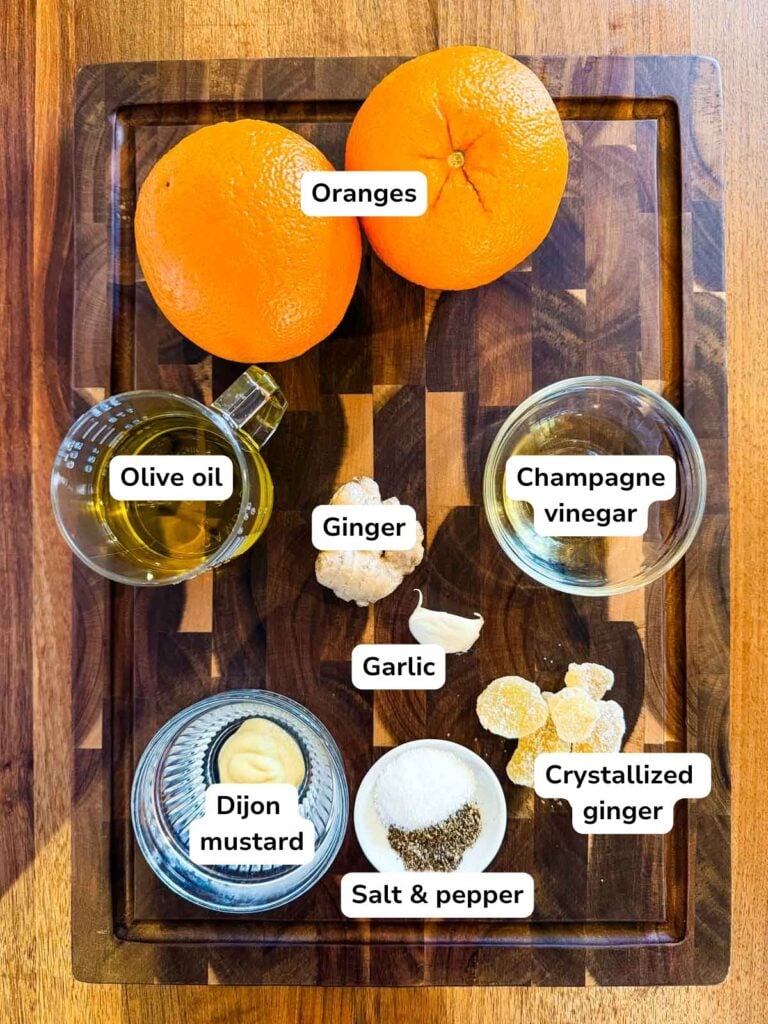
Ingredient Notes & Substitutions
The ingredients to make this vinaigrette are easy to find and readily available at any grocery store. For the best flavor, use fresh oranges and real fresh ginger – both make a big difference here.
Here are a few ingredient notes:
Why Two Types of Ginger?
Most ginger vinaigrettes use one form of ginger and call it a day. This one uses two, and the difference is real.
Fresh ginger is sharp and bright. It has aromatic elements that hit your palate immediately – that zingy, almost spicy top note you recognize right away. The catch is that those compounds are heat-sensitive, which is why fresh ginger loses some of its punch when cooked. In a vinaigrette that never sees heat, though, all of that brightness stays fully intact.
Crystallized ginger has been cooked in sugar syrup, which means those sharp volatile compounds have already transformed. What you’re left with is something deeper, warmer, and a little caramel-y – the base note to fresh ginger’s top note. It also brings a gentle sweetness that complements the tartness of the orange and the champagne vinegar.
Together, they cover the full range of ginger flavor – the immediate brightness and the lingering warmth. Neither one alone does what both do together. That’s the whole idea.

The Technique: How to Make a Vinaigrette
What Is Emulsification?
A vinaigrette is an emulsion – a combination of two things that don’t naturally want to mix: oil and acid. Left alone, they separate. An emulsifier is what brings them together and keeps them that way.
In this ginger vinaigrette, the Dijon mustard is the emulsifier. It has compounds that bond with both the oil and the acid, holding everything in a smooth, cohesive dressing rather than a separated, oily puddle.
The Right Ratio
Classically, the ratio of oil to acid in a vinaigrette is 3:1 – three parts oil to one part acid. I personally lean closer to 2:1 because I like a more assertive, brighter dressing. With orange as the acid here, which is naturally sweeter than most vinegars, this ratio works really well.
The Most Important Step
Always whisk the salt into the acid first – before the oil goes in. Salt dissolves in water-based liquids, not in fat. If you add salt after the oil, it won’t fully dissolve and your vinaigrette will taste under-seasoned no matter how much you add. Dissolve the salt in the orange juice first, taste it, and then stream in the oil.
You can find all of my sauce recipes in one place if you want more inspiration for dressings and finishing sauces.
Let’s Make It Together: STEP BY STEP
Be sure to check out the full recipe and ingredient list in the recipe card below.

1. Add the orange juice, zest, vinegar, mustard, salt and pepper into a bowl.

2. Whisk until the salt is completely dissolved.
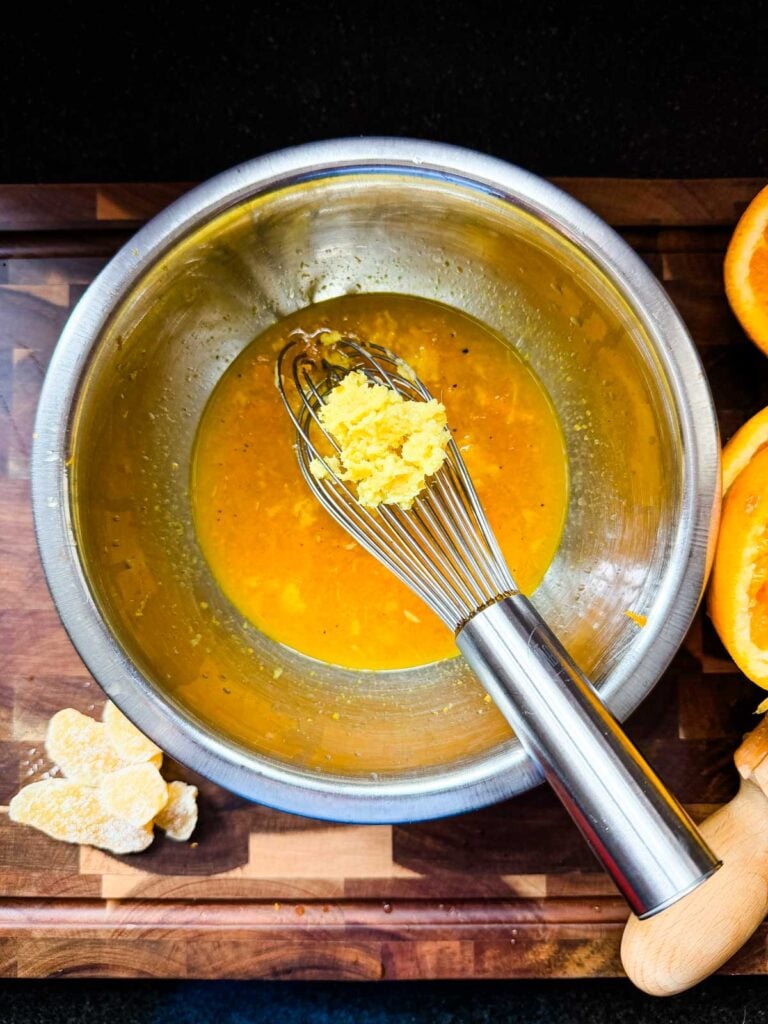
3. Grate the ginger and garlic into the bowl and whisk to combine.

4. While whisking, slowly stream in the olive oil until well emulsified.
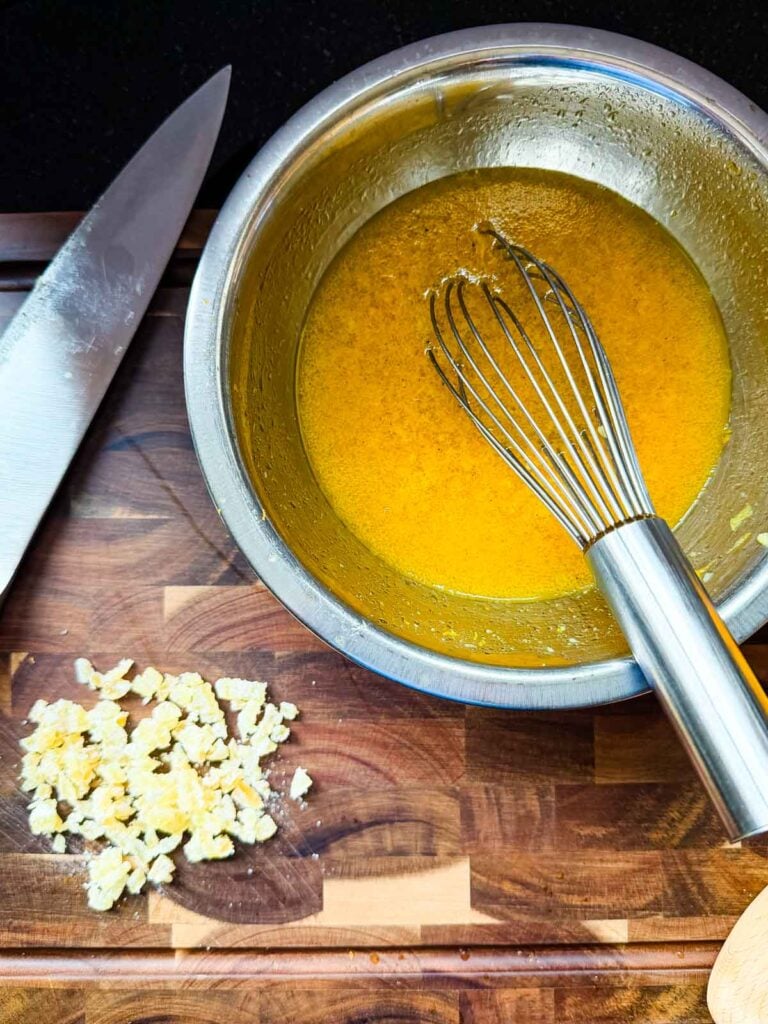
5. Finely chop the crystallized ginger.

6. Add the crystallized ginger and whisk well. Set aside to let flavors meld.
How to Adjust This Vinaigrette to Your Taste
Once you make the vinaigrette, taste it before you call it done. A good vinaigrette should taste a little more intense than you think it should – it will mellow once it hits the other ingredients in your salad or dish. That said, here’s how to dial it in:
| Too sharp or acidic | Add a little more honey, half a teaspoon at a time, or a small splash more olive oil. Both will soften the acidity without muddying the flavor. |
| Too sweet | Add a little more champagne vinegar, a few drops at a time, until the balance feels right. You can also add a small pinch more salt, which will help pull the flavors into better focus. |
| Ginger flavor isn’t coming through | Reach for more fresh ginger rather than crystallized. Fresh is what gives you that immediate bright pop. Add a little more grated fresh ginger, whisk it in, and taste again. |
| Citrus feels flat | Add more orange zest rather than more juice. Zest carries the concentrated citrus oils and intensifies the flavor without making the vinaigrette any more liquid or acidic. |
| Too mild overall | A pinch more salt almost always helps. Salt doesn’t just make things salty – it amplifies everything else that’s already in the dressing. Whisk it in, let it dissolve for a minute, and taste again before adding anything else. |

Natalie’s Expert Tips
- Whisk the salt with the acid first. This is the step most people skip, and it’s the one that makes the biggest difference. The salt fully dissolves in the liquid and you can properly taste and balance the vinaigrette before adding any oil.
- Stream in the oil slowly. Adding the oil in a slow, steady stream while whisking continuously is what creates an emulsification that actually holds. Pour it in too fast and the vinaigrette will break and stay separated.
- Chop the crystallized ginger finely. You want it distributed throughout the dressing so every bite gets a little of that sweet, deep ginger flavor. Large chunks don’t work as well here.
- Prevent your bowl from moving. Roll up a kitchen towel into a ring and rest your bowl on top of it. This keeps everything stable so you can whisk with one hand and pour oil with the other. I do it for my double lemon vinaigrette too – one of those small tricks that really helps.
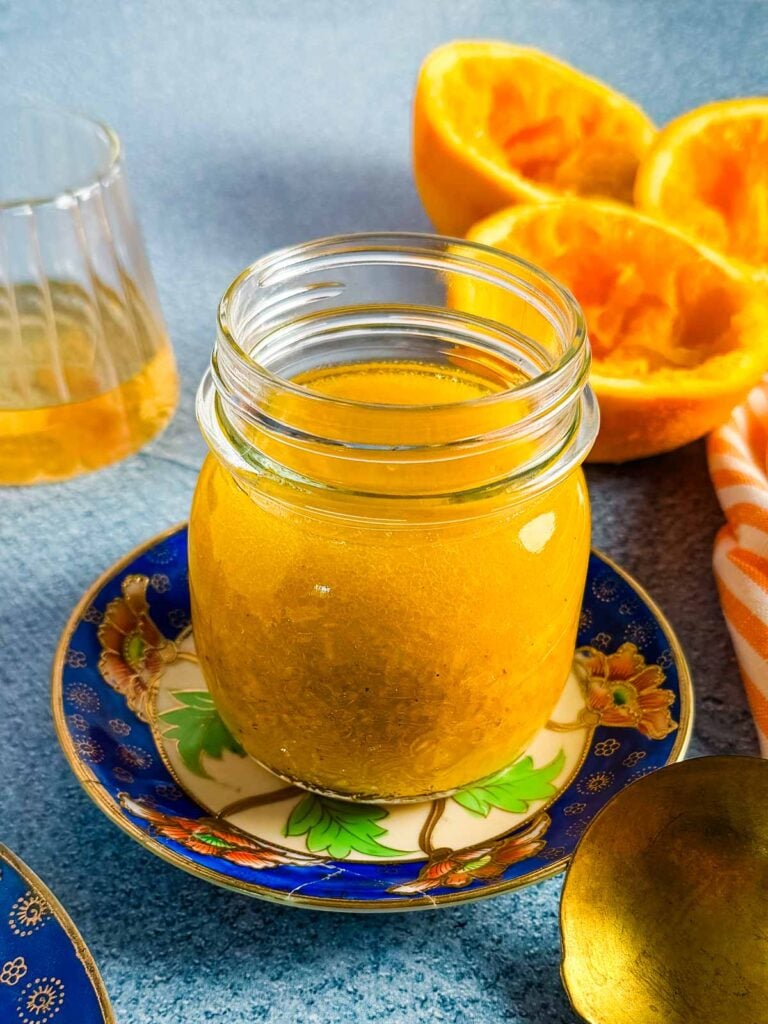
Troubleshooting This Vinaigrette
| Issue | What to Do |
|---|---|
| It separated | This is the most common vinaigrette issue and it’s an easy fix. Add a small drop of fresh Dijon mustard to a clean bowl, then slowly whisk the separated vinaigrette into it, just like you did when you first made it. The fresh mustard gives the emulsification a new anchor point. It comes back together every time. |
| Too acidic or sharp | A few things could cause this. First, your oranges may have been on the tarter side – citrus varies a lot in sweetness depending on the season and the variety. Add a little more honey to balance it out. You can also add a small splash more olive oil, which will soften the acidity without changing the flavor profile much. |
| Tastes flat or one-dimensional | This is almost always a salt issue. Salt amplifies every other flavor in the dressing. Make sure the salt was fully dissolved before the oil went in – undissolved salt doesn’t distribute evenly and can make the dressing taste flat even when there’s enough of it. Whisk in a pinch more, let it sit for a minute, and taste again. |
| Crystallized ginger is sinking | This is normal because the crystallized ginger is heavier than the vinaigrette. Just give it a good stir or shake before using. If you want it more evenly suspended, chop it even finer next time – almost to a paste – and it will stay distributed better. |
| Too thick after being refrigerated | Olive oil solidifies when cold. Let it sit at room temperature for 10 minutes and shake well. |
| Ginger flavor is too strong | If the fresh ginger is overpowering, a little more honey and a splash more orange juice will dial it back without losing the warmth. If the crystallized ginger is what feels too assertive, a tiny bit more olive oil will soften it. Going forward, you can reduce the fresh ginger to a quarter-inch piece instead of a half and see if that suits your taste better. |
Ways to Use This Ginger Vinaigrette
This is one of those versatile dressings that goes far beyond salad. Here are some of my favorite ways to use it:
- As a salad dressing – It’s the backbone of my apple fennel slaw, where its bright ginger flavor cuts right through the crisp, slightly bitter slaw.
- Over roasted vegetables – Drizzle it over roasted carrots, roasted beets, or roasted squash straight out of the oven.
- With fish – This vinaigrette is a natural with salmon and white fish. My slow-roasted salmon with fennel and citrus uses a similar citrus flavor profile and this dressing would be right at home alongside it. Another great option is to drizzle it over my grilled whole branzino instead of the salsa verde for a different flavor profile.
- As a marinade – The acid and ginger make it a great marinade for chicken, shrimp, or pork.
- Drizzled over grain bowls – Spoon it over farro, quinoa, or rice bowls for a fast weeknight finish.
Frequently Asked Questions
Yes, absolutely! In fact, I’d recommend it. Making it a day ahead gives the flavors time to meld and the crystallized ginger time to infuse into the dressing. It keeps in the refrigerator for up to two weeks.
Crystallized ginger is fresh ginger that has been simmered in sugar syrup and then coated in granulated sugar. It has a chewy texture and a deep, warming ginger flavor with a little sweetness. You can find it in the baking aisle, the bulk foods section, or near the dried fruits at most grocery stores.
That’s completely normal, especially after it’s been stored. Just whisk it back together or give the jar a good shake. If it won’t come back together, add a small drop of Dijon and whisk again – that usually does the trick.
I wouldn’t recommend it. Fresh orange juice has a brightness and depth that bottled just doesn’t match. It’s also important to have fresh oranges for the zest, which is a key flavor in this recipe.
You can use ground ginger in a pinch, but the flavor is quite different – earthier and less bright. If you go this route, start with 1/4 teaspoon and taste from there. I’d also keep the crystallized ginger, as it adds a lot.
More Sauces and Dressings You’ll Love
Green Garlic Basil Vinaigrette
I hope you love this vinaigrette!
If you make it, be sure to leave a rating so I know how you liked it!
The Recipe

Ginger Vinaigrette (Fresh + Crystallized)
Equipment
- 1 small bowl
- 1 whisk
- 1 cutting board
- 1 chef's knife
Ingredients
- 2 oranges (zest & juice)
- 1 garlic clove (grated)
- 1/2 inch piece of ginger (grated)
- 1 tablespoon champagne vinegar
- 1 teaspoon Dijon mustard
- 1 teaspoon kosher salt
- 1/2 teaspoon black pepper
- 1/2 cup olive oil
- 2 tablespoons crystallized ginger (finely chopped)
Instructions
- Make the vinaigrette by combining the orange juice and zest, grated garlic, grated ginger, mustard, vinegar, salt and pepper, and whisk until the salt is completely dissolved.
- Next, add the grated garlic and ginger and whisk well to combine.
- Then, while continuously whisking, slowly add the olive oil until completely combined. Lastly, stir in the crystallized ginger.
💌 Save This Recipe
I'll also send you other recipes I know you'll love. Unsubscribe at any time.
Notes
- STORAGE: Store this ginger vinaigrette in a glass jar or airtight container in the refrigerator for up to two weeks. The crystallized ginger will soften a little over time, but the flavor only gets better.
- TO USE FROM COLD: Olive oil will solidify in the refrigerator – this is totally normal. Just let the jar sit at room temperature for about 10 minutes and give it a good shake or whisk before using.
- FREEZING: Not recommended. Vinaigrettes don’t freeze well – the emulsification breaks and the texture changes considerably.
Nutrition
Nice to meet you!
I’m Natalie and I love to create seasonal and interesting elevated food for busy everyday real life! Dinner doesn’t have to be boring and I’m here to help. This is where busy meets delicious!